Eugine Wabwile Juma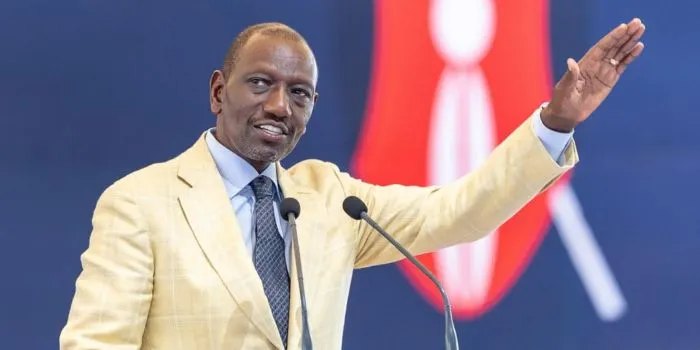
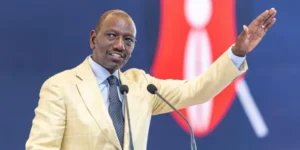
President William Ruto speaking during a past event at State House, Nairobi. PHOTO: William Samoei Ruto
TANDAO MEDIA NEWS
President William Ruto has directed the Kenya Revenue Authority (KRA) to reduce the minimum customs benchmark for consolidated container cargo from Ksh3.2 million back to Ksh2 million, a move aimed at cushioning Micro, Small, and Medium Enterprise (MSME) traders from mounting business shocks. Speaking at State House on Wednesday, September 2, during a meeting with traders, Ruto said the adjustment would ease the burden on small businesses that rely heavily on consolidated imports. He acknowledged their role in sustaining Kenya’s retail economy and promised to ensure that taxation policies do not stifle enterprise.
The President further instructed KRA to compile a list of high‑value goods that will not qualify for consolidation under the Ksh2 million cap, insisting that such items must be assessed independently to ensure fairness in revenue collection. He argued that it was unfair for containers carrying goods worth millions to pay significantly lower cargo charges, stressing that traders must contribute their fair share towards tax revenue and national development.
In addition to the customs directive, Ruto ordered Kenya Railways to reduce freight charges for cargo destined for deconsolidation to Ksh10,000. He also directed the rehabilitation and expansion of land near the Boma Line facility in Nairobi, a cargo deconsolidation and clearance hub adjacent to the Central Railway Station. The site, currently dilapidated, will be upgraded to ease verification and clearance of goods, particularly for traders from Kisumu and Mombasa. Ruto emphasized that the facility should stop looking neglected and instead provide traders with a smooth process of verifying their goods.
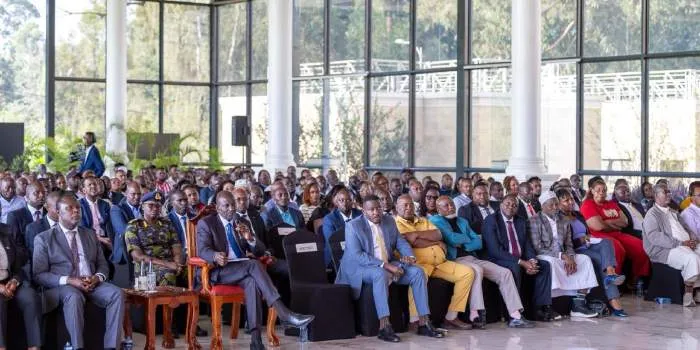
The directive comes as a relief to importers, many of whom had shut down shops in Nairobi on August 28 to protest a 28 percent hike in customs valuation. The increase had hit traders in Gikomba, Kamukunji, and Nyamakima markets hardest, sparking demonstrations outside KRA headquarters. KRA officials defended the valuation figure as a risk‑management reference rather than a flat tax, with Board Chair Ndiritu Muriithi urging traders to de‑consolidate containers at bonded facilities and pay duty only on actual imports.
Ruto’s intervention underscores the political weight of MSMEs, which form the backbone of Kenya’s urban economy. By addressing their grievances directly, he positioned himself as a defender of small traders, a constituency that has historically played a decisive role in shaping electoral outcomes. For traders, the reduction in valuation and freight charges represents not just financial relief but also recognition of their importance in national development. The rehabilitation of clearance facilities signals a broader effort to modernize trade infrastructure, aligning with Ruto’s promise to make Kenya a competitive hub for commerce.