Tandao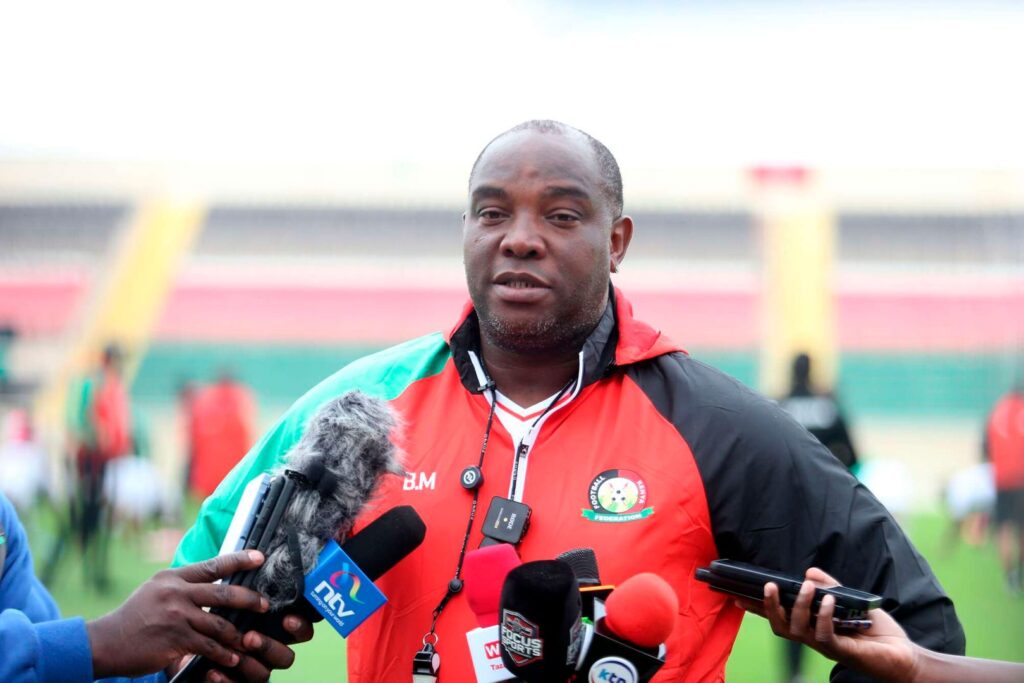
Harambee Stars Headcoach Benni McCarthy address the media after their Caf African Nations Championshion (CHAN) training session on July 23rd 2025 at Nyayo National Stadium.Photo/CHRIS OMOLLO
BY SHEM LUNALO

As the final whistle blows and the roar of the crowd echoes across Kanduyi Stadium, the energy in Bungoma is electric. Here in Western Kenya, football is far more than just a weekend pastime—it is a shared passion that binds communities, schools, and families together.From heated high school rivalries to regional league clashes, thousands of dedicated supporters flood the terraces every week.
They bring an unshakeable devotion to the game, hanging on every tackle, every referee’s decision, and every goal.Yet, while all eyes remain fixed on the players battling on the pitch, a second, invisible conflict unfolds right along the sidelines. It is the quiet struggle taking place inside the press box, where sports journalists face the daily task of reporting the truth under immense pressure.In the modern media landscape, sports reporting is constantly caught between the raw passion of the fans and the rigorous demands of professional ethics.
How reporters cover these matches determines whether sports journalism serves as an honest record or devolves into mere noise.To keep sports news credible, journalists are expected to stand on four non-negotiable pillars: Accuracy, Fairness, Objectivity, and Responsible Sourcing. When any one of these pillars crumbles, public trust in the entire game begins to fall apart.Accuracy demands that every statistic, player name, injury detail, and scoreline is strictly verified before publication. In a fast-moving match, a single careless error can alter a player’s career path or mislead an entire community.
Fairness ensures that every story provides balance, giving accused coaches, referees, or tournament organizers an immediate right of reply before allegations reach the headlines. Without fairness, reporting turns into a tool for public execution.Objectivity calls on journalists to strip away personal team allegiances and financial incentives. Whether covering a neighborhood team or a national powerhouse, a reporter’s duty is to the audience, not to the team wearing their favorite colors.
Finally, Responsible Sourcing acts as the crucial shield against unverified rumors and locker-room gossip. In an era where social media spreads sensational claims in seconds, verifying facts with multiple reliable sources separates real news from clickbait.Nowhere are these ethical principles put to the test more than on the passionate terraces of Bungoma County.
Standing among the fans outside the stadium gates reveals just how closely the public watches the press box.Local supporters invest their time and hard-earned money to back their teams, and they expect straightforward, unbiased coverage in return. When journalists allow personal fandom or hidden interests to color their work, fans pick up on it immediately.”If a reporter is paid by a school or a club to write a story, how can I trust what I read?” asked one local football fan outside Sudi Stadium.
“We don’t want cheerleaders in the media; we just want the raw truth, good or bad!”The rise of instant online updates has only heightened the temptation to trade thorough fact-checking for sheer speed. False transfer claims and exaggerated scandals often go viral before anyone bothers to confirm the facts.”Sometimes you read online that a player has signed for a big club, only to find out later it was completely made up to build hype,” shared a second local league supporter. “Accuracy matters to us as fans because unverified rumors end up hurting the game we love.”Moving from the terraces to the technical bench, the pressure on sports reporters becomes even clearer. Inside school sports programs like Bungoma High School, coaches and teenage players operate under intense public scrutiny.For high school athletes, media coverage carries life-changing weight.
A glowing profile can open doors to national scouting, while an overly harsh or inaccurate story can crush the confidence of a young player still finding their footing.”High school players are still teenagers, not seasoned professionals,” explained a Bungoma High School football coach. “When reporters write one-sided stories or publish unverified claims about player eligibility, it damages the team’s morale and creates unnecessary stress for young boys who are still learning discipline.”The coach emphasized that while constructive criticism is part of the sport, fairness and responsible sourcing must guide how journalists cover youth competitions.”We don’t expect journalists to cover up our tactical mistakes,” the Bungoma High School football coach added.
“All we ask is for fair reporting—get the facts straight from the coaches before printing headlines that could ruin a student’s reputation.”These ethical challenges are by no means limited to Western Kenya’s school games. What starts as a minor compromise on a local pitch ripples directly into the national pipeline of the Football Kenya Federation (FKF) Premier League.On the national stage, the stakes are exponentially higher, with professional contracts, sponsor investments, and national team call-ups on the line.
Yet, the exact same ethical lapses,unverified leaks, biased coverage, and “envelope journalism”,continue to threaten the game’s integrity.Investigating these issues thoroughly also means looking up toward policy and governance. However, holding power accountable often comes with significant access barriers for working journalists.Attempts to secure an official interview with the Ministry of Sports to address media safety, press funding, and federation oversight went unanswered. Yet, the absence of an official response only highlights the vital role of independent journalism in asking hard questions on behalf of the public.
A healthy sports ecosystem requires government transparency, fair sports federations, and above all, an independent press that refuses to trade its integrity for quick access or favors.As the floodlights dim and Kanduyi Stadium falls quiet, one fundamental lesson stands out: sports reporting without ethics is just noise. By standing firm on accuracy, fairness, objectivity, and responsible sourcing, journalists ensure that the real victory always belongs to the truth.