The fourth estate at the ballot: How Kenya’s media has navigated the ethics of election reporting
 Tandao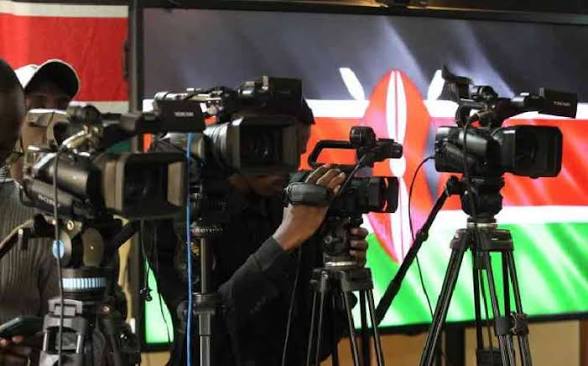
BY MARK MABUSI
From the painful lessons of the 2007 post-election violence to today’s battle against misinformation on digital platforms, Kenyan journalism has undergone a profound transformation.This investigation examines how election reporting has evolved, the rise of peace journalism, the debate over editorial independence and the ethical challenges that continue to shape the media’s role in protecting democracy.
Every election tests more than political parties, candidates and electoral institutions. It also tests the media, whose responsibility is to provide citizens with accurate, balanced and verified information before they make decisions at the ballot. During election periods, journalists work under immense pressure, navigating political influence, commercial interests, tight deadlines and rapidly spreading misinformation.
The challenge is not simply to report events as they unfold, but to do so ethically while safeguarding public trust.Kenya’s electoral history has shown that journalism can strengthen democracy by informing voters, exposing wrongdoing and holding leaders accountable. At the same time, election coverage has repeatedly raised difficult questions about bias, fairness, editorial independence and the influence of the media on public perception.
As the country prepares for future elections, these questions remain as relevant as ever.The debate over ethical election reporting cannot be separated from the events surrounding the 2007 General Election. The disputed presidential results triggered one of Kenya’s darkest periods, leaving more than 1,000 people dead and displacing hundreds of thousands.
In the aftermath, attention turned to several institutions, including the media, with questions about whether some broadcasts had contributed to heightened tensions.Investigations and media reviews that followed acknowledged that the causes of the violence were complex, involving political competition, historical grievances, ethnic divisions and institutional failures.
While some local-language broadcasts and political messaging came under criticism, many scholars and journalists cautioned against attributing the violence solely to the media.Kenyan freelance writer Nanjala Nyabola maintains that the post-election violence cannot be explained by media coverage alone. She argues that while journalism played a role in the broader information environment, the crisis was rooted in deeper political and historical factors. In her assessment, reducing the tragedy to a media failure oversimplifies a far more complex national crisis.
Nyabola says the events of 2007 fundamentally changed newsroom thinking ahead of the 2013 General Election. She observes that many editors and reporters embraced conflict-sensitive reporting and what became widely known as peace journalism. The objective was to avoid repeating mistakes that might contribute to renewed tensions while encouraging calm across the country.According to Nyabola, the intention behind peace journalism was understandable, but it also generated a new debate within the profession.

She believes that, in some instances, journalists became so cautious that difficult questions about governance, accountability and political responsibility received less prominence than they otherwise might have. The challenge, she argues, is finding a balance between promoting peace and preserving journalism’s watchdog role.That shift in editorial thinking was visible across many Kenyan newsrooms during the 2013 elections.
Stories were subjected to stricter editorial scrutiny, verification standards were strengthened and conflict-sensitive language became a priority. News organisations invested in election training and encouraged journalists to avoid speculation, inflammatory reporting and unverified political claims.Former KTN News Managing Editor Joe Ageyo says the mood inside newsrooms in 2013 reflected the painful memory of the 2007 violence. He recalls that journalists were determined to report responsibly and avoid content that could escalate tensions. According to Ageyo, many editors consciously adopted a more cautious editorial approach throughout the election period.
Ageyo says that, with hindsight, sections of the media were later criticised for being overly careful. He notes that some observers believed the pursuit of peace journalism occasionally reduced the willingness of news organisations to aggressively question those in power. Even so, he maintains that the overriding concern at the time was preventing another national crisis while ensuring citizens continued receiving credible information.
The debate surrounding peace journalism remains one of the defining discussions in Kenyan media today. Supporters argue that responsible reporting helped reduce tensions during subsequent elections, while critics contend that journalism should never sacrifice accountability in the name of stability. The question remains whether peace and robust scrutiny can coexist without one weakening the other.
As Kenya’s political environment evolved, the ethical responsibilities facing journalists became even more demanding. Election campaigns increasingly moved beyond physical rallies into television studios, online platforms and social media, where information and misinformation could spread within minutes. Newsrooms found themselves competing not only with rival broadcasters but also with millions of digital users publishing unverified content in real time.
For journalists on the campaign trail, accuracy became just as important as speed. Every political statement required verification, every allegation demanded context and every developing story had to be assessed carefully before publication. The pressure to publish first was now competing directly with the obligation to publish correctly.Radio Maisha journalist and author Dancan Waswa says election reporting has become a race against time.
He explains that political statements spread rapidly while audiences expect immediate updates across multiple platforms. In his view, ethical journalism requires reporters to resist the temptation of speed for its own sake and instead prioritise verification, fairness and context before publishing.Waswa says journalists frequently find themselves balancing the public’s right to know against political pressure, misinformation and the responsibility to avoid inflaming already charged political environments.
He argues that the defining question for every newsroom is whether accuracy can survive the pressure of modern election coverage.His observations reflect a broader challenge confronting journalism today. In an increasingly competitive media landscape, the race to break news can sometimes overshadow the equally important responsibility of ensuring every report is accurate, balanced and supported by verified evidence.
As campaigns intensify, those ethical decisions become even more significant because they directly shape public confidence in both the media and the electoral process.The evolution of television journalism has added another dimension to election reporting. Live broadcasts, presidential debates, breaking news and digital streaming have transformed how Kenyans consume political information. Television remains one of the most influential platforms during elections, often setting the agenda for national conversations.
Every headline, interview and live cross-over has the potential to shape how citizens understand political events.TV47 Digital author Meshack Mwaluse says television journalists carry a unique responsibility because of their wide reach and influence. He explains that while presenters are expected to remain impartial, they must also ask difficult questions, challenge misleading statements and ensure competing political voices receive a fair hearing. According to Mwaluse, the challenge lies in informing the public without appearing to influence how voters make their choices.
He says the line between informing and shaping public perception can become blurred during highly competitive campaigns. Decisions on which rallies to broadcast live, which interviews lead news bulletins and how stories are framed inevitably attract public scrutiny. For that reason, editorial judgment must always be guided by fairness, balance and the public interest rather than political preference.Questions about editorial independence extend beyond television presenters to the newsroom itself.
Every election day bulletin is the result of dozens of editorial decisions made long before viewers see the final product. Editors decide which stories deserve prominence, how political events are framed and which voices receive greater attention.Former Senior Reporter at The Standard, Robert Wanyonyi, says audiences rarely see the editorial discussions that shape election coverage. According to him, editors carry enormous responsibility because their decisions can strengthen public confidence or create perceptions of bias.

He argues that ethical journalism is tested not only in the field, where reporters gather information, but also inside editorial meetings where news priorities are determined.Wanyonyi points to the long-standing reputation of editorial independence in sections of Kenya’s mainstream media as an important safeguard for democracy. He says newsroom independence allows journalists to question those in authority without fear or favour. However, he acknowledges that maintaining that independence becomes increasingly difficult during election periods when political pressure and commercial interests intensify.
By the 2017 General Election, Kenyan journalism faced another defining moment. The presidential election, the Supreme Court’s historic nullification of the presidential results, the repeat election and the protests that followed placed extraordinary demands on the media. Newsrooms had to provide continuous coverage while maintaining accuracy, fairness and restraint in an atmosphere of heightened political tension.Unlike 2007, the debate in 2017 centred less on inflammatory broadcasting and more on the media’s ability to report a rapidly changing political environment responsibly. Journalists were expected to explain complex legal proceedings, verify conflicting political claims and report demonstrations without sensationalism.
The election demonstrated that ethical journalism requires both speed and discipline under intense public scrutiny.Five years later, the 2022 General Election introduced a different challenge. The campaign was no longer dominated solely by television, radio and newspapers. Social media platforms had become major sources of political information, while online influencers, digital campaign teams and coordinated misinformation networks increasingly shaped public debate.Mainstream media responded by strengthening fact-checking, expanding live verification and relying more heavily on evidence-based reporting.
Yet the speed at which false information spread online meant journalists were often responding to rumours that had already reached millions of users. The battle for accuracy had expanded beyond traditional newsrooms into the digital information space.The emergence of artificial intelligence, manipulated videos and coordinated online propaganda has further complicated election reporting.
Journalists today must verify not only spoken statements but also digital content capable of misleading millions within minutes. Ethical reporting therefore demands new skills, stronger verification systems and constant vigilance against misinformation.Despite these changes, public perception remains divided. Some young voters interviewed during this investigation said they believe certain media houses dedicate more airtime and prominence to particular politicians than others.

Whether those perceptions arise from editorial judgment or actual imbalance, they continue to influence public confidence in election coverage.Several voters argued that equal treatment of candidates remains essential to maintaining trust in journalism. They said media organisations should ensure all major political players receive fair opportunities to communicate their policies while journalists continue asking equally difficult questions regardless of political affiliation.The investigation also found that many citizens still consider mainstream media more reliable than information circulating on social media.
However, that trust depends on journalists consistently demonstrating fairness, accuracy and independence. Once credibility is lost, rebuilding public confidence becomes significantly more difficult.Recent by-elections have demonstrated that election reporting continues to expose journalists to significant risks. Cases of intimidation, attacks on reporters and restrictions on media access have highlighted the importance of protecting press freedom.
Ethical journalism cannot thrive where journalists fear violence or political retaliation for performing their duties.Media experts interviewed for this investigation agree that journalism should neither become a political actor nor retreat from holding leaders accountable. Promoting peace and preventing harmful reporting are legitimate responsibilities, but they should not replace rigorous scrutiny of public officials or careful investigation of issues affecting voters.The findings also suggest that Kenyan journalism has evolved considerably since 2007.
Newsrooms have strengthened editorial guidelines, invested in election reporting training, improved verification practices and become more conscious of the consequences of irresponsible reporting. These developments reflect lessons learned from previous electoral cycles.At the same time, new ethical challenges continue to emerge.
Political pressure, commercial interests, misinformation, unequal access to media platforms and public perceptions of bias remain issues that require constant attention. Ethical journalism is therefore not a destination but an ongoing commitment that must adapt to changing political and technological realities.
Findings by Mark Mabusi reveal that Kenya’s media has made significant progress in strengthening ethical election reporting over the past two decades. From the painful lessons of 2007 to the demands of today’s digital era, journalists have demonstrated greater commitment to verification, fairness and conflict-sensitive reporting.
Yet the investigation also shows that balancing peace journalism with accountability, maintaining editorial independence and preserving public trust remain among the profession’s greatest challenges.As Kenya looks ahead to future elections, the role of the media will remain central to democratic governance. Journalists will continue informing voters, scrutinizing leaders and verifying facts in an increasingly complex information environment. Their greatest responsibility is not to shape electoral outcomes, but to ensure every Kenyan has access to truthful, accurate and balanced information upon which to make informed democratic choices.